
Anyone involved in the care of a baby will need to change a lot of diapers. This is no one’s favorite task but it’s a wonderful opportunity to have eye contact, exchange smiles and develop language with songs and conversation. The diaper changing area is also a good place to hang a mobile for baby to look at.
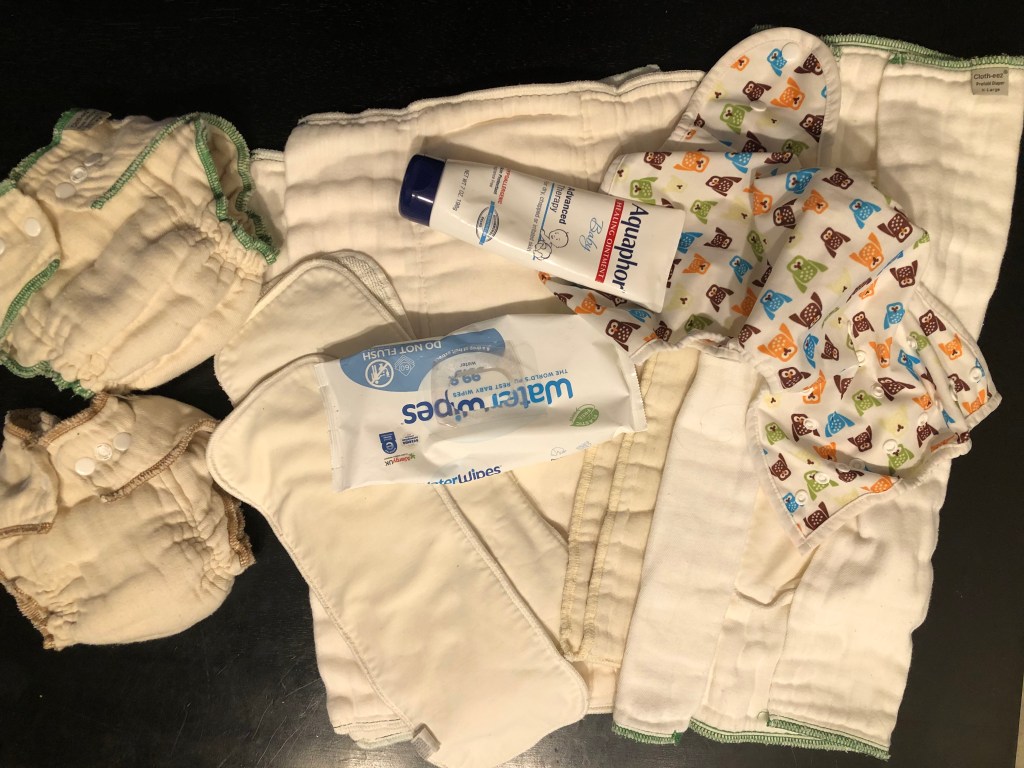
Diapers come in all kinds: more choices than there have ever been in human history. There are disposable diapers using a variety of materials from tree pulp to bamboo fibers. They contain layers of waterproofing, elastic and adhesive. There are many different shapes and sizes of cloth diapers and diaper wraps. They need fasteners such as Snappi , or baby safety pins. How do parents even choose?
Before there were so many options, back when my grandmothers were in the nappy changing years, they had 11 children between them, the standard was to use cotton fabric and then terry cotton fabric. The “nappies” were usually cut into 24 inch squares and folded in various ways according to the age and size of the infant. The lining material, very useful for separating poop out, was originally muslin and later became the paper-like material we see today. The poop would be removed by holding the nappy in the toilet directly under the flushing water. Soiled nappies would accumulate in a bucket until laundry time when they would be boiled in soapy water in a suitably large metal pot on the stove top. Cotton handkerchiefs were also cleaned in this way but in their own separate pan of course.
These pre-second world war nappies needed covers to help keep the wetness from the baby’s clothes. The early diaper covers were knitted. Wool holds a lot of water. Environmentally conscious and thrifty people today prefer to knit their own diaper covers and many patterns are available. When rubber pants came in, they were able to keep all the moisture safely inside but were associated with skin issues for the baby. Later on, plastic pants took over from rubber pants and seem to be a little more breathable. My mother used terry cloth nappies and plastic pants for all four of us.
When it came time for me to choose what diapers to use, my mother shipped terry cloth squares to the United States for me, along with some pretty plastic pants. Diaper pins and paper liners were readily available everywhere and I bought two diaper buckets. Since we lived in apartments for most of the diaper changing years I was happy that the very heavy, full buckets did not have to be carried far to the washing machine. The washing machine! I still remember my Nana pulling up a chair in front of a new front loading washing machine in the 70s. She lit up a cigarette and just smiled watching all the work being done that she had done on a washboard and then using a twin tub and mangle. I was grateful for my washing machine every day, especially for taking care of diapers. When I had cleaned out the buckets, I would fill them with water and add Borax as a bacteriostatic before dropping the next wet diaper in. The diapers were tumble dried until we bought our first home and were able to hang them out in the yard. The clean diapers smelled really good from the outside air.
One of the reasons for choosing cloth diapers was that disposable diapers were not only outside our budget, but at the time, they were all bleached white with dioxins and I wasn’t comfortable with how dioxins were ending up in the water supply. I was also aware of disposable diapers creating a problem with landfills because there were just so many. However, I do know that there is an environmental cost to cloth diapers as well. How much of an environmental cost depends on how energy efficient your washing machine is and whether you are able to dry them on a washing line. The diapers themselves lasted through the years and were eventually used as cleaning rags until they fell apart. All in all they saved us a lot of money.
When we traveled I did use disposable diapers but if we were on a long trip to visit the grandparents and family in England I switched to the alternative more modern cloth diapers that were the same shape as disposable diapers. At that time, they were not as good at holding moisture and had to be changed immediately anything happened.
My daughter and son in law use unbleached bamboo diapers for when my granddaughter is at away from home, at my house or visiting the doctor. Bamboo has recently been used more as a super renewable resource to create products for paper, fabric and wood. We all have a lot of bamboo around these days. Anytime my granddaughter goes to infant care she would also be restricted to disposable diapers. At home the new parents tried out a number of cloth diaper systems, many from Buy Nothing groups locally. Eventually, by trying on different diapers, fillers and covers they settled on what worked for them for daytime and a different system with more extra layers for night time. They also have both cloth and paper swim diapers. None of these cloth diapers were anything that I had used myself. I had to learn how to do cloth diapers with Snappis instead of pins, and folding rectangles (pre-folds) instead of squares. It was almost like I had never changed a diaper before!
We are all getting lots of practice in the diaper changing routine, not forgetting the diaper cream, well most of the time anyway.
What diapers does your grandchild use?
 NanaKim
Leave a comment