
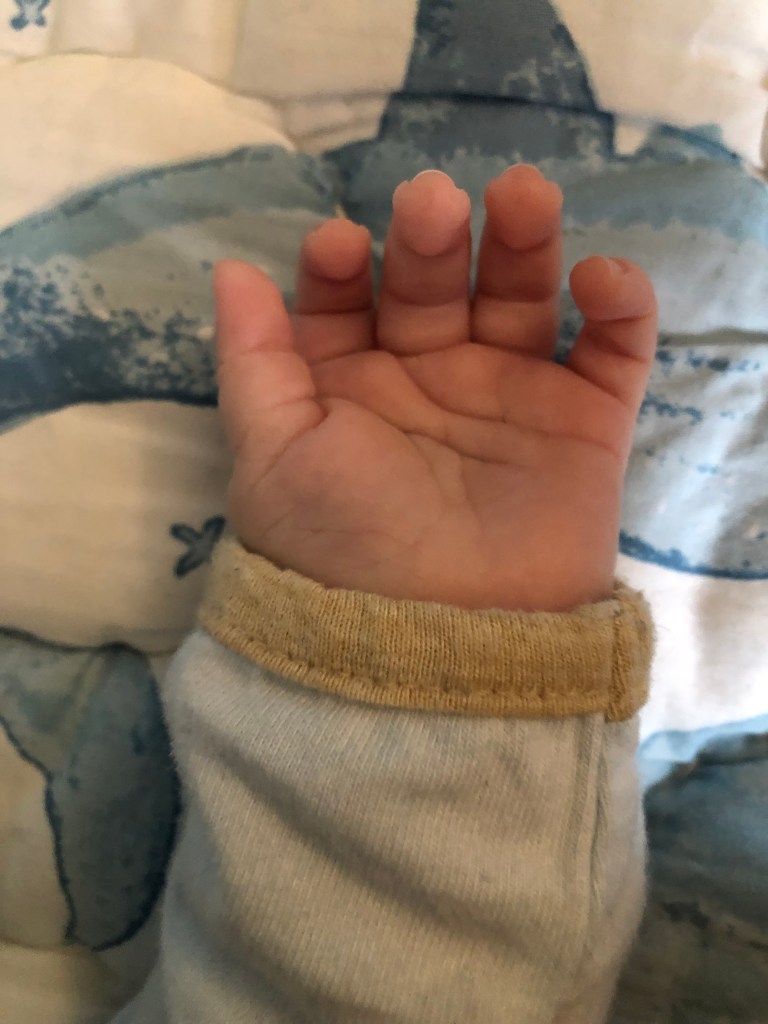
I enjoy using what little sign language I know. I started learning through church where we taught Bible stories through a Montessori based approach called Godly Play ( Godlyplay.org). The songs we used along with the liturgy came with signing. My favorite was “Be still and know that I am God.” We could sing it, say it, whisper it, but we always signed it – I liked the grace of the movements. I have also seen someone sign the Lord’s Prayer during the worship service and how beautiful the dancing of the arms and hands looked. I don’t have hearing impaired people in my family but I have met friends who do and learned so much from them. Building on that knowledge, I learned more about accommodations for hearing impaired children as part of my Masters in Education. Even though I was interested to learn about the fact of sign language. I didn’t have an interest in acquiring another language myself.
During my years being in early childhood education, sign language was increasingly talked about for classroom communication with young children. This would give teachers and children another tool for interaction. Through being with children in my work, I did learn to use sign language especially at mealtimes for please, thank you, more, all done, drink, milk, water etc. I was building vocabulary without putting any study effort in. Later, as a quality standards coach visiting infant and toddler classrooms, I saw that sign language was used to reinforce verbal communication with children who were old enough to focus on watching the caregiver’s movements. During that time, I picked up a sign language booklet at a conference, which for some reason I held on to: 100 Signs for Parents from Dawn Sign Press. Looking at it now, I think it will be very useful to for learning new vocabulary to use with my grandchild.
My daughter has friends who are already parents and one of them encouraged my daughter to focus on sign language with her future baby. Their son was shown the sign for diaper every time they wanted to check and change him. He started to sign it back to them, which the parents understood to mean, “please change me, I’m wet”. However, he would then sign “diaper” when he was dry. They soon figured out that he didn’t want any time in a wet diaper at all and that he was ready to pee. Sign language helped that child potty train himself before he could say the words. Signing is easier for babies to use than constructing sentences verbally.
So, my daughter and son in law decided to add in sign language to their child’s education plan and I was instructed to learn. They suggested some videos on YouTube and I found some of my own. I learned from my daughter that their three cats would be referred to by the sign for cat followed by the initial letter of the cat’s name. Luckily all their names begin with different letters. Even the cat at my house has a unique initial letter. On that model, I learned to sign “Nana” followed by the letter “k” so that I could sign my name “NanaKim” to the baby.
I do remember that time frame between when my own babies were first alert and following everything that was happening before their first words came.I longed to be able to communicate with them other than by trying to read their body language and decipher their vocalizations. The anticipation of verbal communication was exciting and frustrating at the same time. However, that was before anyone was talking about using sign language with children whose hearing was perfectly fine. I am really looking forward to having this extra language to use with my grandchild.
This is one of my favorite videos of the many available on YouTube simply because you get to see children using sign language so you get an idea of the variation in what you might see in how children use signs that you teach them. You don’t have to know very much to get the benefit.
I wonder if sign language will become the norm for babies of future generations in my family?
 NanaKim
Leave a comment